Forecast
The Forecast section helps you anticipate future product demand by analyzing historical sales data and current trends. With accurate forecasting, you can plan your inventory purchases and replenishments more effectively, avoid stockouts, and reduce excess inventory.
This feature uses various sales velocity metrics and historical patterns to give you actionable insights that support smarter inventory decisions.
Key Features
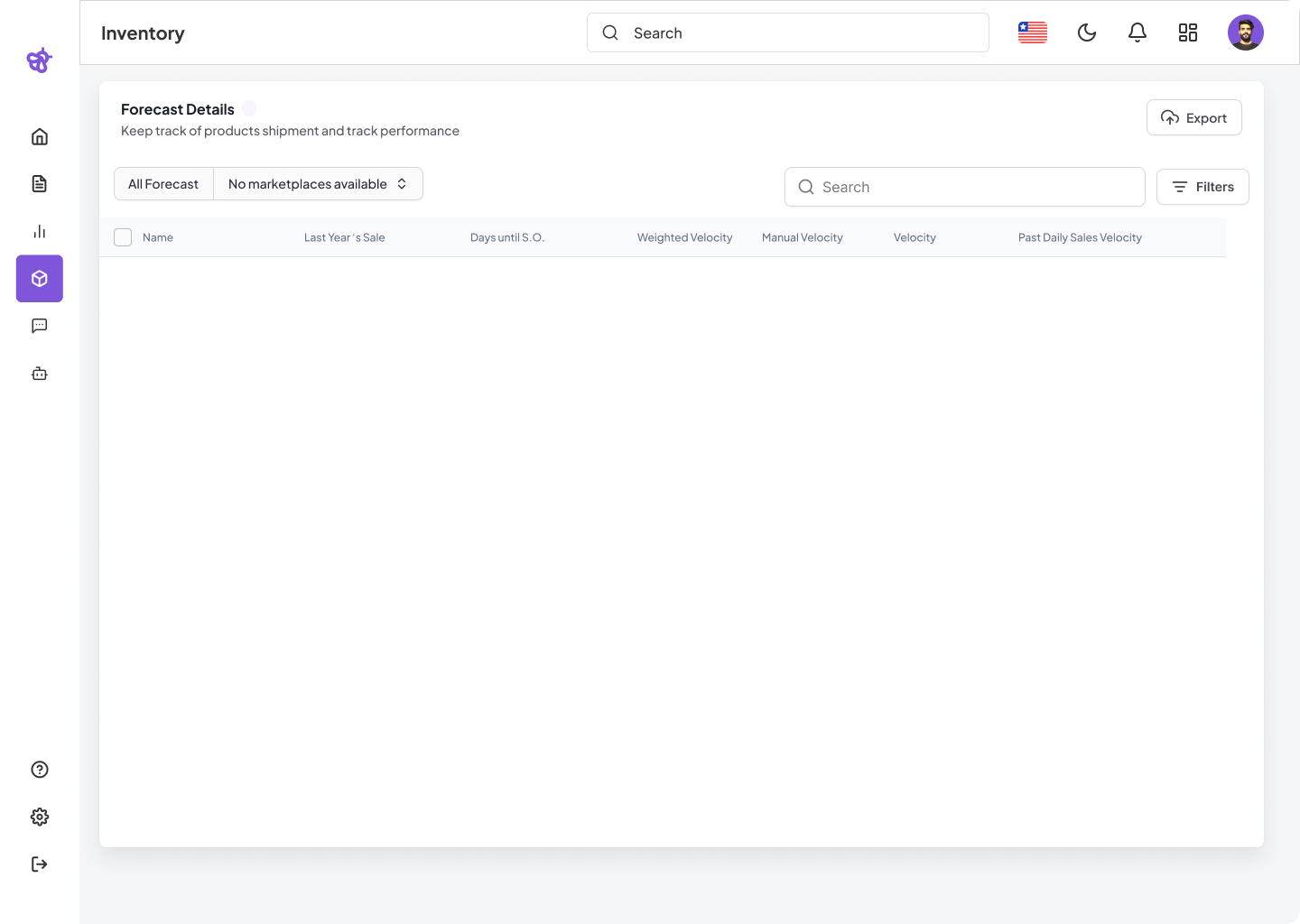
Forecast Details Panel
- Overview Message: “Keep track of products shipment and track performance.”
- Forecast Type Selector: Allows users to select among various forecast types (e.g., historical trend, weighted velocity).
- Marketplace Filter: Enables filtering by available marketplaces. (Note: In this instance, no marketplaces are currently available.)
Search and Filter
- Search Bar: Enables fast lookup of specific products or forecasts by name or identifier.
- Filters Button: Provides additional filtering options such as date ranges, velocity type, or stockout risk level.
Export Functionality
- Export Button: Allows users to download/export forecast data (e.g., as CSV/Excel) for offline analysis, reporting, or sharing with stakeholders.
Forecast Table Columns
| Column | Description |
|---|---|
| Name | Unique identifier or name of the product. |
| Last Year’s Sale | Sales figures for the same product from the previous year. |
| Days until S.O. | Estimated number of days until stockout (S.O.), critical for replenishment. |
| Weighted Velocity | Sales velocity adjusted by weight factors (seasonal trends, promo history). |
| Manual Velocity | User-defined velocity overrides for specific products. |
| Velocity | Standard or system-calculated sales velocity metric. |
| Past Daily Sales Velocity | Historical average daily sales rate, useful for trend analysis. |
Inventory planners use this screen to:
- Predict stock requirements over time.
- Identify fast-moving or underperforming products.
- Prevent out-of-stock scenarios by analyzing sales velocity and stockout timelines.
- Fine-tune reorder quantities using multiple velocity metrics.
This screen supports proactive inventory decision-making by offering granular insights into product performance and forecasted stock behavior. It enables better alignment between supply chain activities and demand trends.