FBA Shipments
This FBA Shipments enables detailed monitoring and management of Fulfillment by Amazon (FBA) shipments, helping businesses maintain oversight of inbound shipments and their associated statuses.
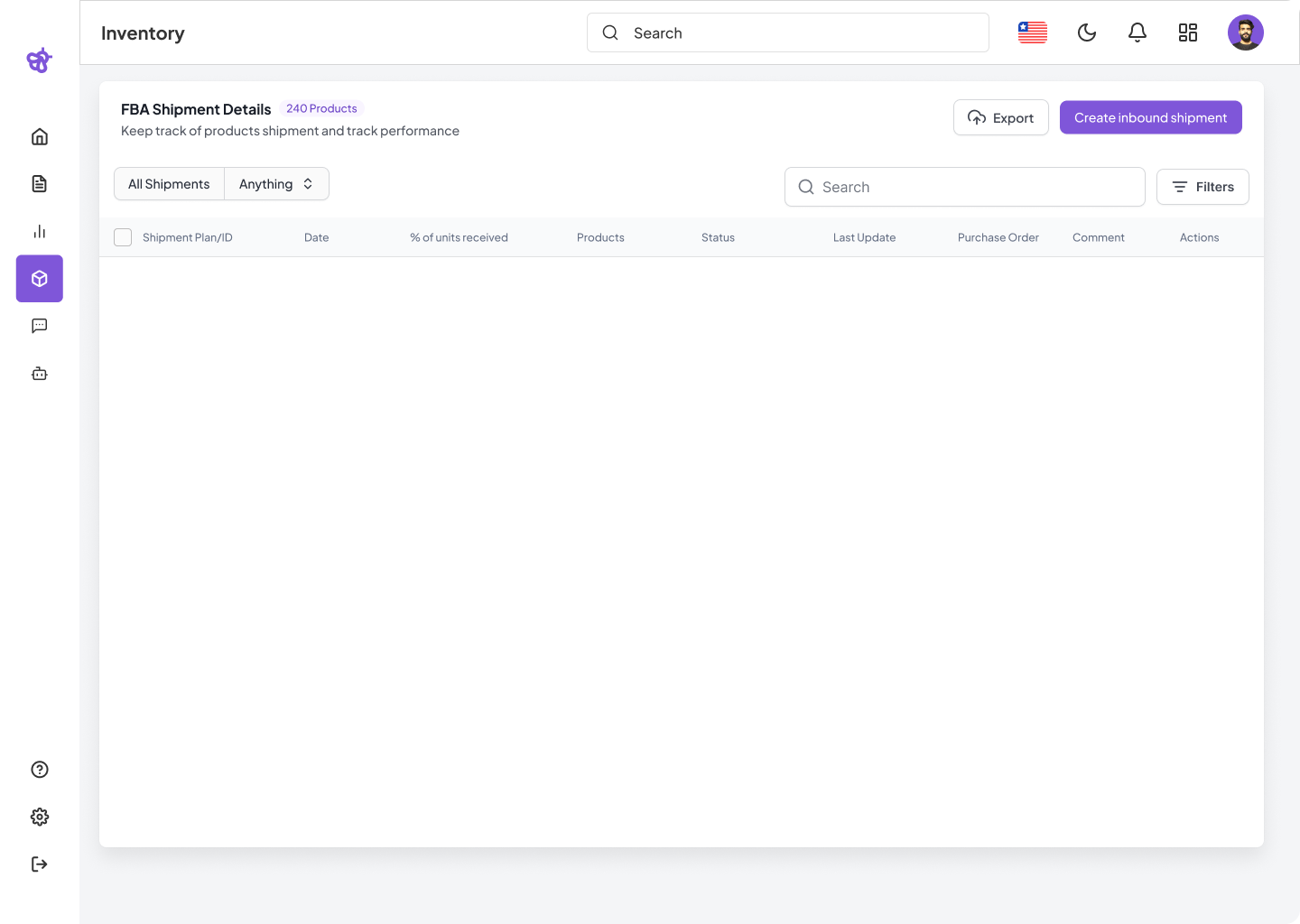
Key Features
FBA Shipment Details Panel
- Product Count Message: Displays the total number of products being tracked (e.g., “240 Products”).
- Purpose Statement: “Keep track of products shipment and track performance.”
Shipment Filters
- Dropdown Filters: Filter shipments by type or status:
- Shipment Type: e.g., “Inbound Only”, “Return Shipments”
- Status: e.g., “All Shipments”, “In Transit”, “Delivered”, “Pending”
Create Inbound Shipment
- Create Shipment Button: Prominently placed to allow quick initiation of a new inbound shipment to Amazon’s fulfillment centers.
Search and Filter
- Search Bar: Quickly locate specific shipments by ID, product name, or PO.
- Filters Button: Provides advanced filters (date range, shipping method, status, etc.).
Export Functionality
- Export Button: Export shipment data for external analysis, reporting, or audits.
Shipment Table Columns
| Column | Description |
|---|---|
| Shipment Plan/ID | Unique identifier of the shipment or plan. |
| Date | The date when the shipment was created or dispatched. |
| % of Units Received | Progress metric showing received vs. shipped unit ratio. |
| Products | List of products included in the shipment. |
| Status | Current status of the shipment (e.g., In Transit, Received). |
| Last Update | Timestamp of the latest update regarding this shipment. |
| Purchase Order | Links shipment to its originating PO. |
| Comment | Notes or updates related to the shipment. |
| Actions | Options to edit, delete, or further manage the shipment. |
Logistics and operations teams use this to:
- Monitor the real-time progress of FBA shipments.
- Reconcile received inventory against what was shipped.
- Ensure timely arrival at Amazon fulfillment centers.
- Maintain documentation and notes on every shipment.
This screen ensures transparency and traceability of Amazon FBA inbound shipments. By offering granular data, search, filtering, and export capabilities, it becomes an essential tool for logistics management and inventory reconciliation.